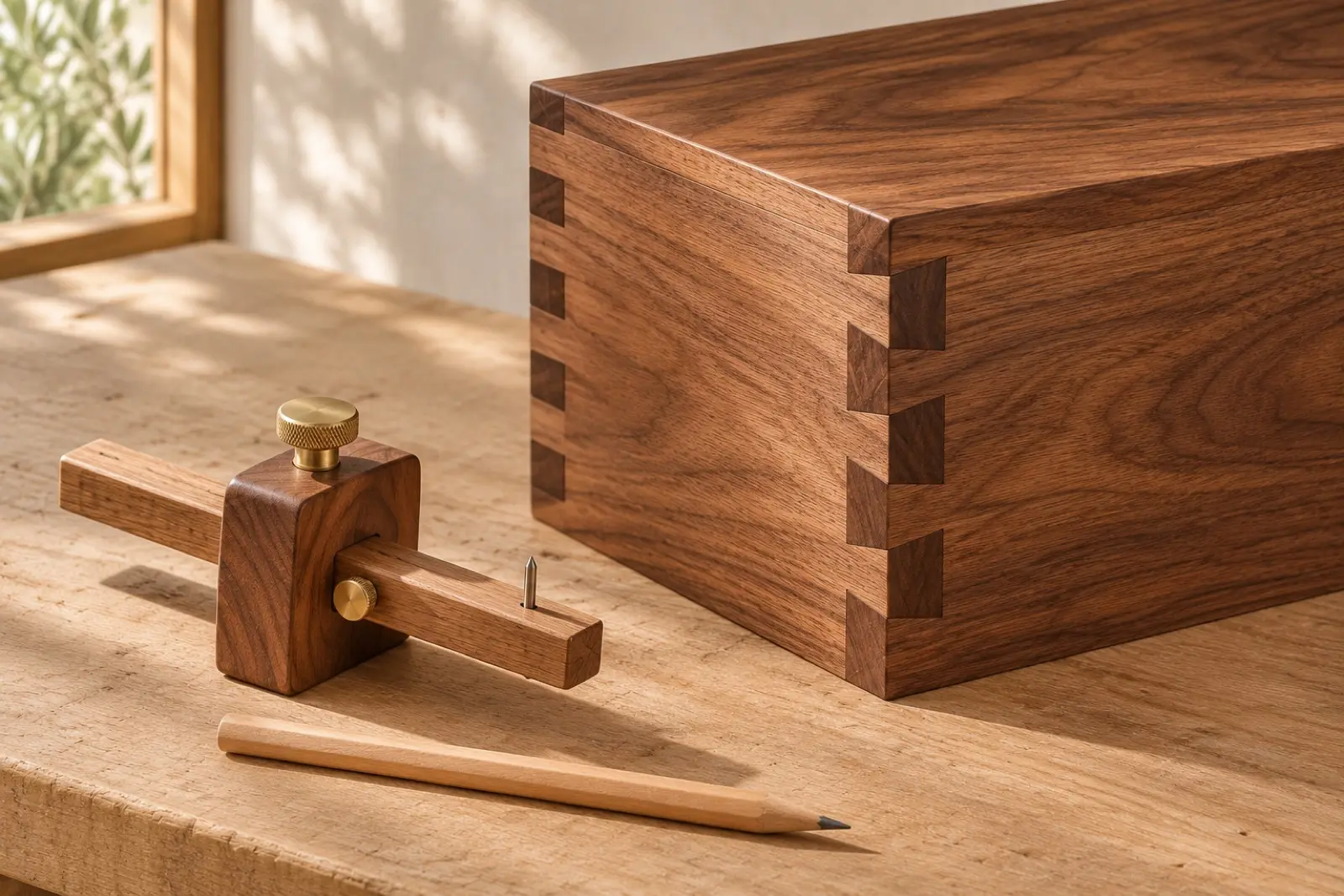
Pull out a drawer of the Dune dresser and look at its front corners. The interlocking fan-shaped tails are dovetails, cut with a saw and a chisel by one of our nine makers. Each drawer takes about forty minutes to join. A machine would do it in two.
What a joint does
A drawer front is pulled thousands of times. A screwed or stapled corner loosens a little each time; a dovetail cannot pull apart in that direction at all. The glue only keeps it from sliding sideways. That is why drawers from the eighteenth century still run.
Box joints, the square fingers on the corners of the Sandouk chest, do the same work for a box that is lifted and loaded: more glue surface, no metal, nothing to rust.
We sign the inside of every drawer. Not for us: for whoever repairs it in sixty years.
Where machines help
We are not romantic about it. Boards are ripped and planed by machine, which is safer and more precise. Joints that carry load, and surfaces you will touch every day, are finished by hand.